Subsonic carrier
- ReleaseMach 0.8 at approximately 12 km
- AdvantageExisting aircraft, runways and maintenance practice
- Orbital stackCompact two-stage rocket is the credible baseline
- PurposeProve carriage, separation, ignition and range operations
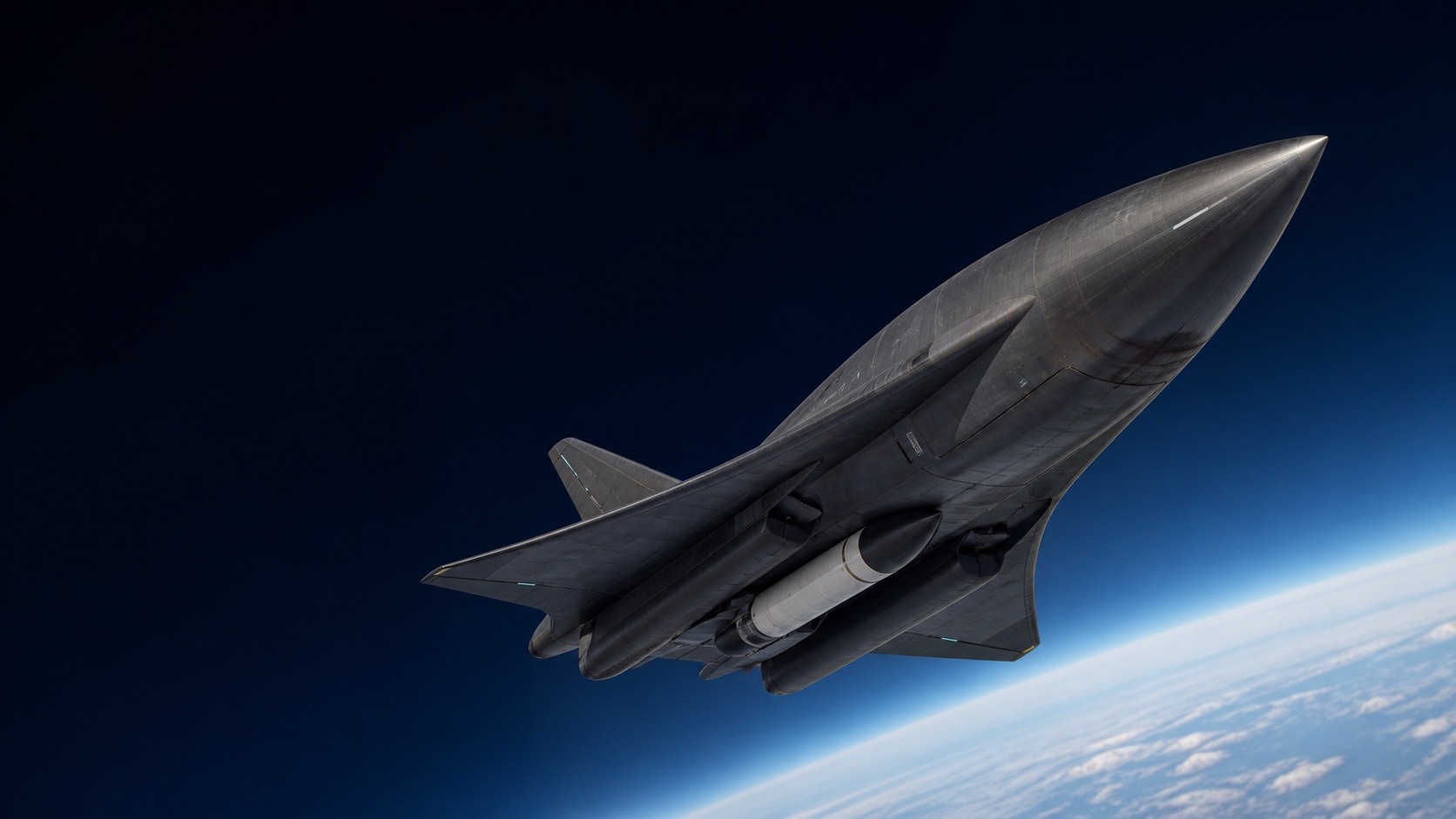
Reusable air-breathing first stage
A runway-launched hypersonic carrier uses the atmosphere for ascent. A compact orbital stage finishes the job in vacuum.
A staged answer to orbit
Do not carry wings to orbit. Do not carry first-stage oxygen from the runway. Let each vehicle do one job well.
The carrier operates where air-breathing propulsion has leverage. The orbital stage takes over where only rocket propulsion works.
Reusable carrier departs conventionally with the orbital vehicle secured in a ventral cradle.
Air-breathing propulsion accelerates the combined system toward Mach 5 without carrying first-stage oxidizer.
A shallow coast trades a modest amount of speed for altitude while preserving horizontal momentum.
The orbital stage ignites after clear separation. The carrier descends toward a runway recovery.
The release target is near-zero vertical velocity—not zero total velocity. The carrier keeps its valuable downrange momentum while dynamic pressure collapses with altitude.
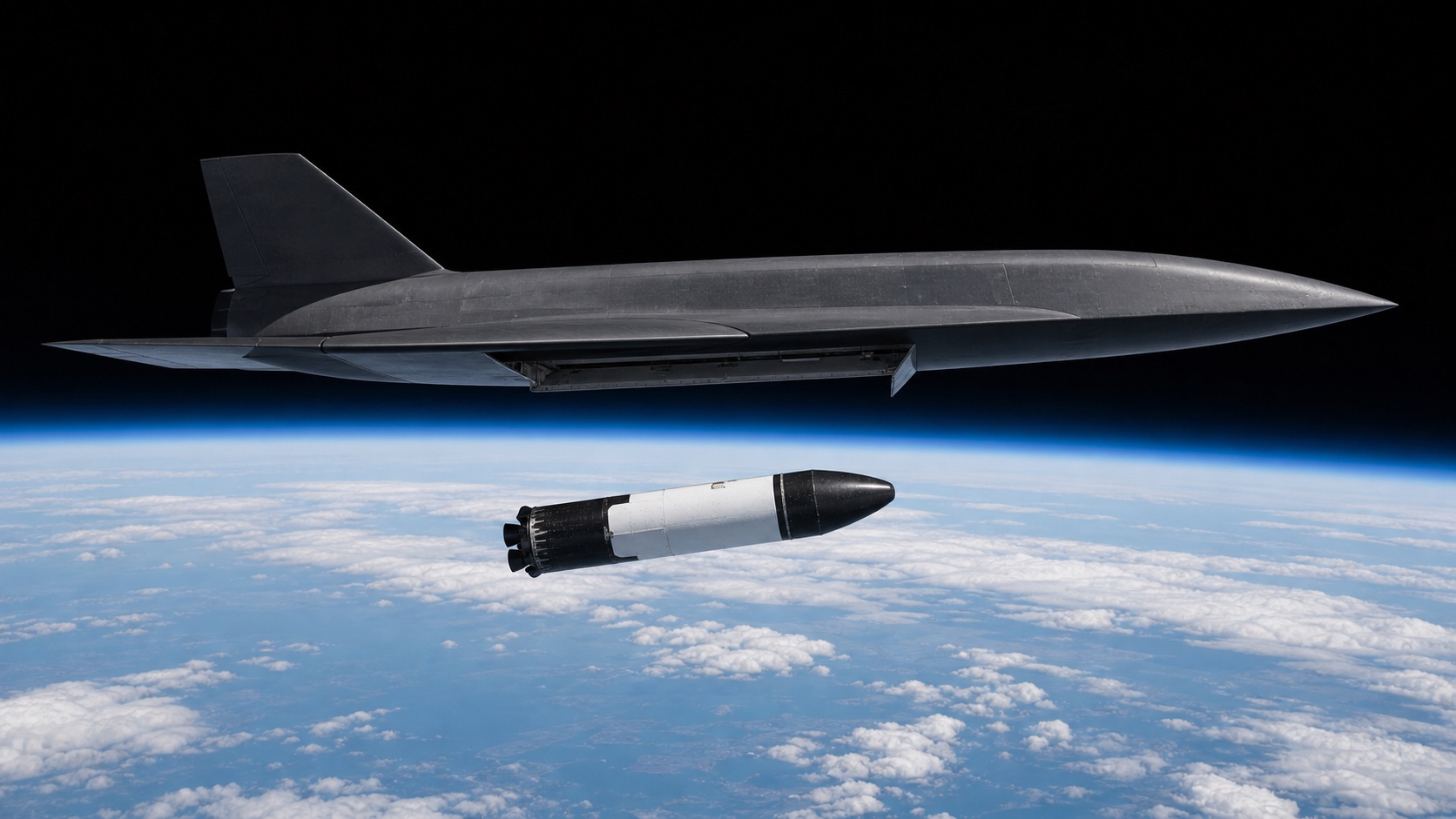
Subsonic air launch is the fastest path to flight data. Hypersonic launch is the long-term mass advantage.